 Matsushima Bay Tours
Matsushima Oysters: When and Where to Eat Them
Matsushima oysters are in season roughly November to March, and the easiest place to eat them is the tourism association oyster hut, where 40 minutes of all-you-can-eat grilled oysters costs 3,500 yen ($22.15) for adults. Winter is when the town builds its calendar around the harvest: the hut opens about early November, the Matsushima Oyster Festival fills the Green Plaza in early February, and one boat company runs a winter oyster hotpot cruise on the water. The fish market by the shore is the other reliable spot, with food counters serving until mid-afternoon. This guide covers the season month by month, what each option costs, and how to fit oysters, the bay cruise and the temples into one day. If you would rather hand the planning to someone else, some tours compared here already bundle an oyster lunch with the cruise, and you can browse the best Matsushima Bay tours for the full picture.
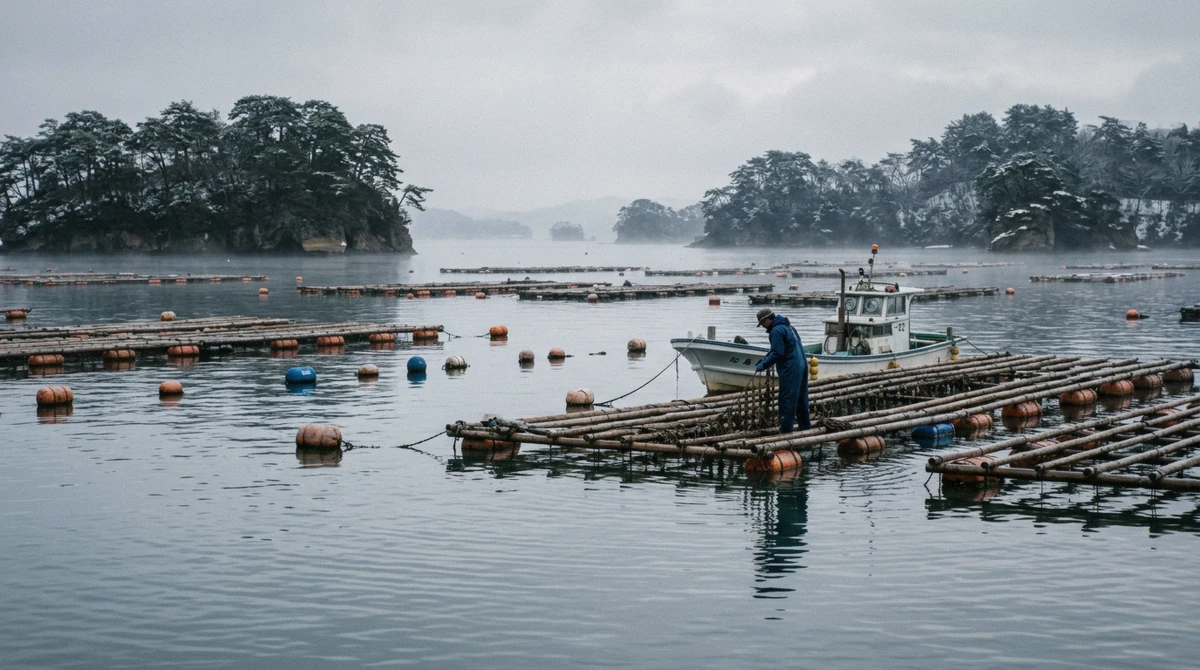
Oyster rafts on the bay. Illustrative image.
Quick answer Season dates, hut prices, festival timing and the one-day oyster plan
Matsushima oyster season runs roughly November to March, and the oysters are best in the coldest months. The tourism association oyster hut, open from about early November to early March, serves 40 minutes of all-you-can-eat grilled oysters for 3,500 yen ($22.15) per adult and 1,750 yen ($11.08) per child. The Matsushima Oyster Festival takes place in early February at the Matsushima-Kaigan Green Plaza. The fish market by the shore opens roughly 8:00 to 17:00 and serves oysters and other seafood at its counters until mid-afternoon. For one booking that covers the lot, Matsushima Private Tour with an Oyster Lunch, Bay Cruise and Hotel Pickup pairs a 50-minute cruise and the temples with an oyster lunch.
Key takeaways
- Oyster season runs roughly November to March, with the oyster hut open from about early November to early March.
- All-you-can-eat grilled oysters at the hut cost 3,500 yen ($22.15) for adults and 1,750 yen ($11.08) for children, for a 40-minute session.
- The Matsushima Oyster Festival is held in early February at the Green Plaza.
- The fish market by the shore opens roughly 8:00 to 17:00, with food counters until mid-afternoon, so go early for the full choice.
- For a guided day, Matsushima Private Tour with an Oyster Lunch, Bay Cruise and Hotel Pickup includes an oyster lunch, or compare the cost of eating on your own in the price table below.
Which Oyster Plan Fits You
If you want the cheapest proper oyster lunch
Build the day yourself between November and March around the oyster hut at 3,500 yen ($22.15) and the fish market, using this month-by-month guide to pick the date.
If you want the temples and the bay as well, without planning
Book Matsushima Private Tour with an Oyster Lunch, Bay Cruise and Hotel Pickup, which runs 6.5 hours by car with hotel pickup.
If you are visiting in January or February on a short trip
Time the visit to the oyster hut plus the festival in early February, and add Matsushima Walking Tour: Zuiganji, Godaido and Fukuurajima before lunch.
If you want fish cake grilling and the cruise from a bus seat
Take Sendai Daikannon, Jogi Temple and Matsushima Bay Cruise Bus Tour, which runs about 9 hours and includes sasakamaboko grilling.
If you are coming from Tokyo with a spare day
Look at Matsushima and Sendai Two-Day Private Tour from Tokyo, which notes that oysters are best from November to March.
Matsushima Oyster Season Month by Month
Oysters are a cold-water crop in Matsushima. The season runs roughly November to March, the oyster hut opens about early November and closes about early March, and the festival lands in early February at the heart of it. The table below reads like this: the conditions column tracks the oysters and what else is on, the weather column uses typical figures for the Sendai coast, and the verdict column says in a few words whether the month works for an oyster trip.
Typical conditions for each month of the year around Matsushima.
| Month | Oysters and conditions | Weather | Crowds | Verdict |
|---|---|---|---|---|
| January | Peak season, oyster hut open | High 5.6°C (42°F), low -1.3°C (30°F), light snow | Low, quieter after New Year | Best, cold and quiet |
| February | Peak season, Oyster Festival early February | High 6.5°C (44°F), low -1.1°C (30°F) | High around the festival weekend | Best, festival month |
| March | Hut closes about early March, tail of the season | High 10.0°C (50°F), low 1.4°C (35°F) | Low to moderate | Good, season winds down |
| April | Season over, cherry blossom at Saigyo Modoshi no Matsu peaks mid to late April | High 15.5°C (60°F), low 6.3°C (43°F) | Moderate, blossom weekends | Skip for oysters |
| May | No oyster season | High 20.2°C (68°F), low 11.7°C (53°F) | Moderate | Skip for oysters |
| June | No season, rainy season starts mid-June | High 23.1°C (74°F), low 16.1°C (61°F) | Low | Skip for oysters |
| July | No season, rainy season into mid-July | High 26.6°C (80°F), low 20.2°C (68°F) | Moderate | Skip for oysters |
| August | No season, Toro Nagashi lantern festival on 17 August with about 8,000 fireworks | High 28.2°C (83°F), low 21.6°C (71°F) | High for the festival | Skip for oysters |
| September | No season, typhoon risk peaks and wind cancels boats | High 25.0°C (77°F), low 18.0°C (64°F) | Low | Avoid, boat cancellations |
| October | No season yet, autumn leaves build at Entsuin and Zuiganji | High 19.8°C (68°F), low 11.9°C (53°F) | Moderate, leaf weekends | Too early for oysters |
| November | Hut opens about early November, leaves peak late October to mid November with the Entsuin night light-up | High 14.1°C (57°F), low 5.6°C (42°F) | Moderate, leaf viewers | Very good, hut opens |
| December | Season running, boats shift to a last sailing about 15:00 | High 8.3°C (47°F), low 0.9°C (34°F) | Low outside New Year week | Very good, cold-water oysters |
The short read: the deepest part of winter, January and February, is the strongest window, and November is nearly as good with autumn leaves on top. March works only in its first days, because the hut closes about early March. From April to October there is no oyster season to speak of, so plan those months around the temples and the cruise instead.
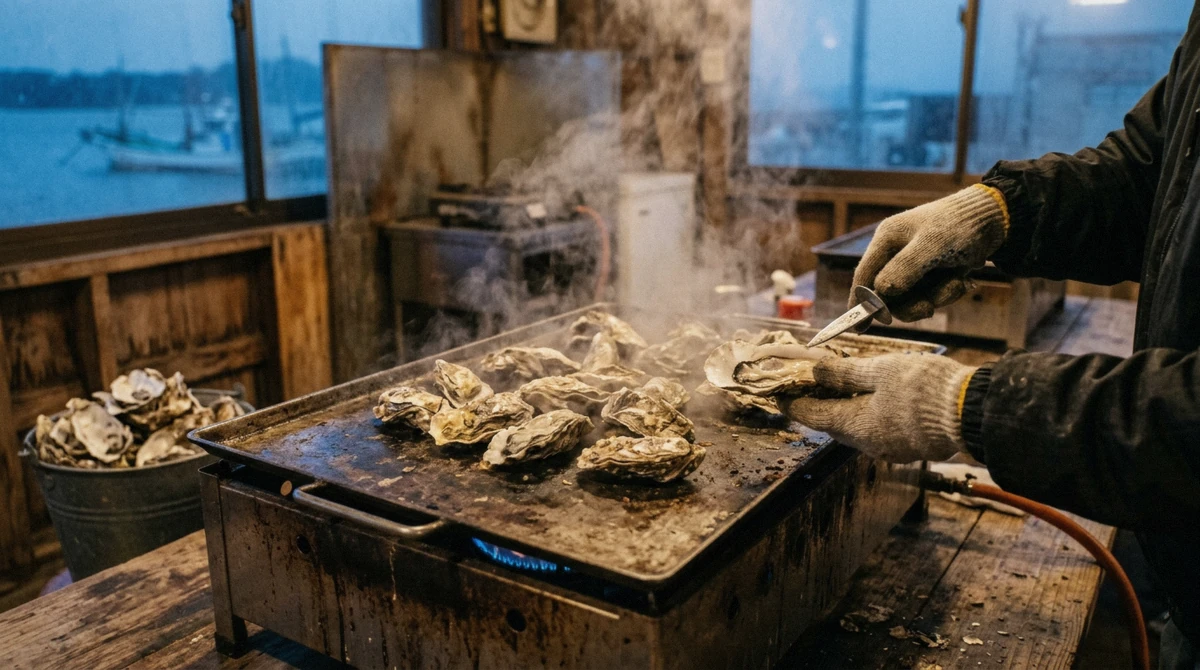
The oyster huts grill oysters in the shell. Illustrative image.
Winter Temperatures and What to Wear
The oyster months are the cold months, so the numbers matter for how long you want to sit outdoors at the hut. Typical figures below come from the Japan Meteorological Agency normals for Sendai, about 20 kilometres away on the same coast, and rainfall figures are not stated in the source data, so check the current forecast close to your dates on the JMA site.
Typical monthly high and low temperatures on the Sendai coast.
| Month | High | Low | Rain |
|---|---|---|---|
| January | 5.6°C (42°F) | -1.3°C (30°F) | not stated |
| February | 6.5°C (44°F) | -1.1°C (30°F) | not stated |
| March | 10.0°C (50°F) | 1.4°C (35°F) | not stated |
| April | 15.5°C (60°F) | 6.3°C (43°F) | not stated |
| May | 20.2°C (68°F) | 11.7°C (53°F) | not stated |
| June | 23.1°C (74°F) | 16.1°C (61°F) | not stated |
| July | 26.6°C (80°F) | 20.2°C (68°F) | not stated |
| August | 28.2°C (83°F) | 21.6°C (71°F) | not stated |
| September | 25.0°C (77°F) | 18.0°C (64°F) | not stated |
| October | 19.8°C (68°F) | 11.9°C (53°F) | not stated |
| November | 14.1°C (57°F) | 5.6°C (42°F) | not stated |
| December | 8.3°C (47°F) | 0.9°C (34°F) | not stated |
January is the coldest month by these numbers, with a typical low below freezing, and it is also peak oyster season. Dress for standing outside at the hut: a warm coat, gloves and something underfoot that handles light snow. Winter brings light snow rather than deep snow, so the town stays walkable.
Where to Eat Oysters in Matsushima
Three places cover almost every visit: the oyster hut, the fish market and the festival. Here is what each one is and when it runs.
- The tourism association oyster hut (kaki-goya) runs from about early November to early March, with 40 minutes of all-you-can-eat grilled oysters for 3,500 yen ($22.15) adults and 1,750 yen ($11.08) children.
- The Matsushima fish market (Matsushima Uogashi) sits by the shore and opens roughly 8:00 to 17:00, with food counters serving until mid-afternoon.
- The Matsushima Oyster Festival is held in early February at the Matsushima-Kaigan Green Plaza, an open space on the shore side of town.
- Anago (conger eel) rice bowls are served at seafood restaurants around the fish market, a good fallback if oysters are not your thing.
- The winter oyster hotpot cruise from Marubun Matsushima Kisen puts oyster hotpot on the water, a seasonal extra on top of its regular sailings.
Grilled is the default here. The hut grills everything, the festival is built around grilled oysters, and the hotpot cruise cooks them in broth. The published information does not say whether raw oysters are served anywhere in Matsushima, so treat grilled as the norm and ask on the day if raw matters to you.
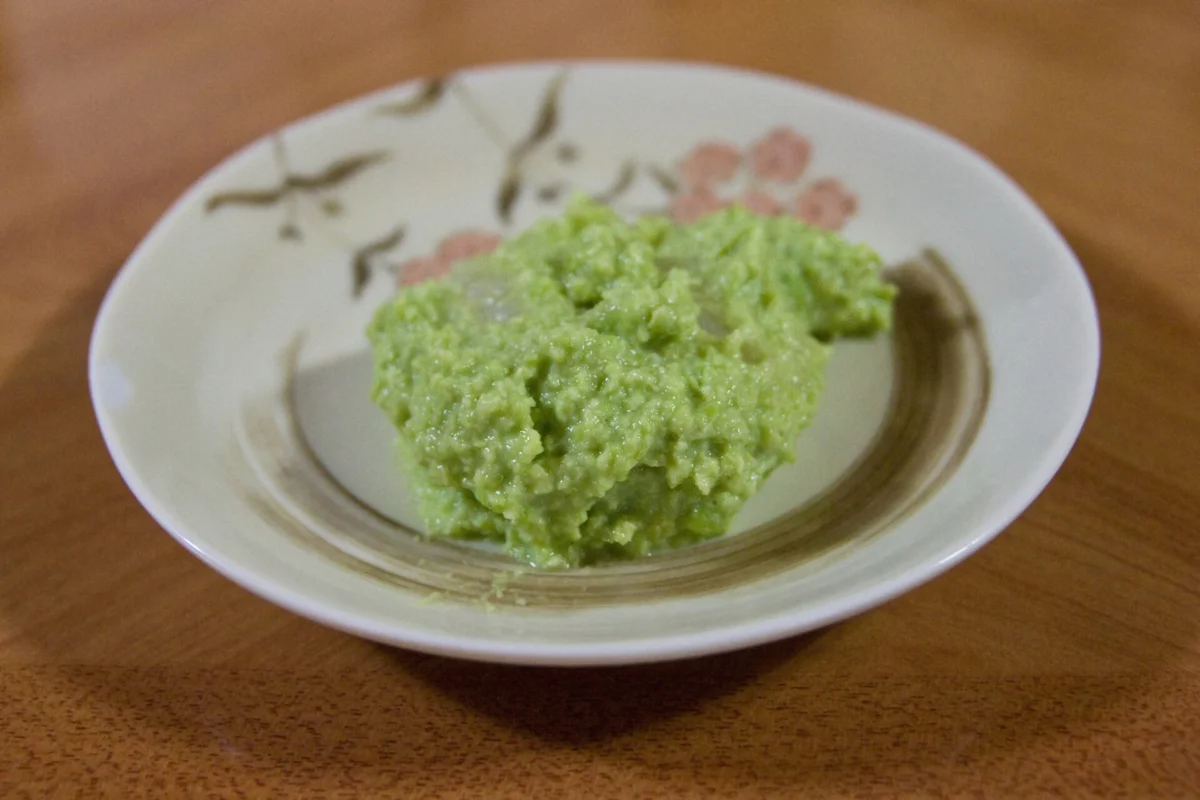
Zunda mochi, rice cake under sweet edamame paste. Photo: Σ64, CC BY 4.0, via Wikimedia Commons.
What an Oyster Day Costs
This section compares the three ways to eat oysters here: building the day yourself around the hut and the market, taking the one catalog listing that includes an oyster lunch, and adding up a full do-it-yourself day with the cruise and temple entries. All figures come from the published prices on this site and from official operator pages.
Cost comparison for an oyster day in Matsushima.
| Option | Food cost | What the price covers | Trade-off |
|---|---|---|---|
| Oyster hut on your own | 3,500 yen ($22.15) adults, 1,750 yen ($11.08) children | 40 minutes of all-you-can-eat grilled oysters | Cheapest, but you arrange the cruise and temples yourself |
| Fish market lunch | not stated, priced per dish at the counters | Oysters and anago bowls, pay for what you order | Flexible, but no all-you-can-eat format |
| Matsushima Private Tour with an Oyster Lunch, Bay Cruise and Hotel Pickup | $222 per person | 6.5 hours by car, hotel pickup, the 50-minute cruise, Zuiganji, Entsuin, Godaido, Kanrantei with matcha, the Fukuura bridge and an oyster lunch | One booking covers the whole day, at the highest price |
| Do-it-yourself full day | 3,200 yen ($20.25) for cruise and entries, plus hut or market food | Cruise 1,500 yen ($9.49), Zuiganji 1,000 yen ($6.33), Entsuin 500 yen ($3.16), Fukuura bridge 200 yen ($1.27) | Lowest total cost, more planning |
A note on the arithmetic. The tour price of $222 per person buys the car, the guide, the pickup and the food, so it is not directly comparable to the hut's 3,500 yen ($22.15), which is food only. The honest comparison is the tour against your own assembled day at roughly 3,200 yen ($20.25) for entries and the cruise, about 820 yen ($5.19) return by train from Sendai, plus lunch.
If you value your planning time, the tour wins. If you enjoy piecing a day together, the hut and the market win on price. You can see how the rest of the listings compare on Matsushima Bay tour prices.
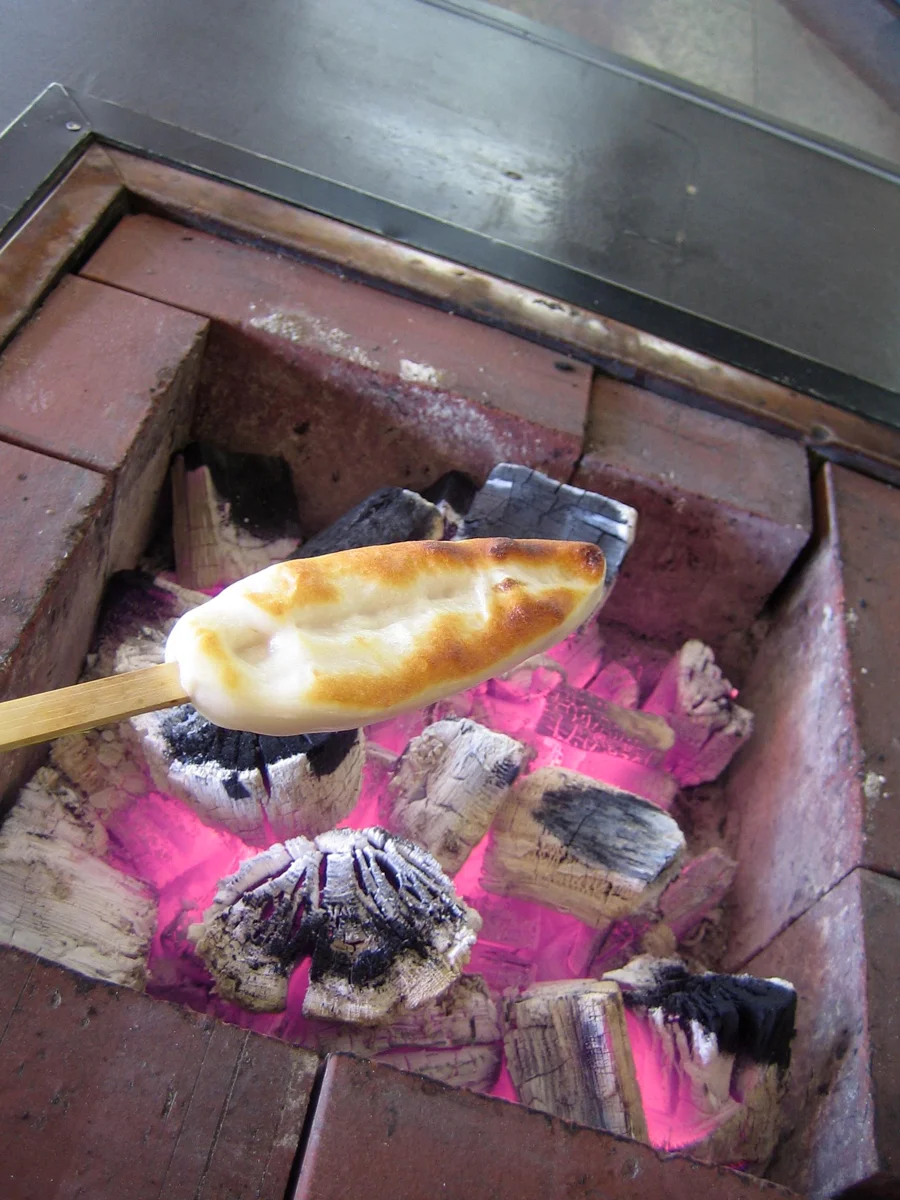
Sasakamaboko, the leaf-shaped fish cake. Photo: nyaa_birdies_perch, CC BY 2.0, via Wikimedia Commons.
The Oyster Hotpot Cruise and the Other Foods to Try
Oysters are the headliner in winter, but they sit on a short local menu worth knowing. Marubun Matsushima Kisen adds a winter oyster hotpot cruise to its regular schedule, alongside its autumn light-up cruise, so you can eat oysters on the bay instead of beside it. The regular Basho course runs one-way between the Matsushima pier and Marine Gate Shiogama in about 50 minutes, with standard fares from 1,500 yen ($9.49) for adults, and sailings roughly 9:00 to 15:00.
The supporting cast on land.
- Sasakamaboko, a fish cake grilled in the shape of a bamboo leaf, is a Miyagi speciality you can grill yourself at some shops. The bus tour listed on this site includes fish cake grilling.
- Zunda mochi is rice cake under a sweet paste of mashed edamame, another Miyagi speciality. The day tour from Sendai includes matcha with zunda mochi at Kanrantei teahouse.
- Anago (conger eel) rice bowls are served at seafood restaurants around the fish market.
- Gyutan, grilled beef tongue with barley rice and oxtail soup, is the Sendai city speciality, so save it for dinner back in Sendai.
If food is the point of the trip, Matsushima Bay Day Tour from Sendai with a Scenic Boat Cruise builds in lunch stop time at the fish market and the matcha set at Kanrantei, though lunch itself is at your own cost. It runs about 8 hours, leaves Sendai Station at 9:00 and is rated 5.0 from 9 reviews.
One Day in Matsushima with Oysters, the Cruise and the Temples
The town is compact, so an oyster day and a sightseeing day are the same day in season. Here is a shape that works, built from published opening hours and sailing times. Take the JR Senseki Line from Sendai to Matsushima-Kaigan, 25 to 40 minutes and 410 yen ($2.59) one way.
Start at the fish market around opening time, roughly 8:00, if you want the counters before they wind down mid-afternoon. Walk the 6 to 7 minutes to the pier and take the 50-minute loop cruise, which departs roughly every hour from about 9:00, with the last boat about 15:00 from November to March. Sit inside if the open-water section concerns you, and note the boat can rock.
After the cruise, do Zuiganji, open from 8:30 with last entry 30 minutes before a closing time of 15:30 in December and January, 16:00 in February and November and 16:30 in March. Then Godaido Hall on its islet, free and open all day, and Entsuin until 15:30 in winter. Book your hut session or market lunch around the middle of the day, and finish at Kanrantei with matcha if there is time.
If you would rather not sequence it yourself, a guided option does the work. The oyster lunch private tour covers Godaido, the cruise, Kanrantei, Zuiganji, Entsuin, an oyster lunch and the Fukuura bridge in 6.5 hours with hotel pickup from 8:30 in Sendai. For a shorter, cheaper spine to build the day on, Matsushima Walking Tour: Zuiganji, Godaido and Fukuurajima covers the temples in 2 to 3 hours and ends near the pier.
More detail on the boats sits in our Matsushima Bay cruise guide.
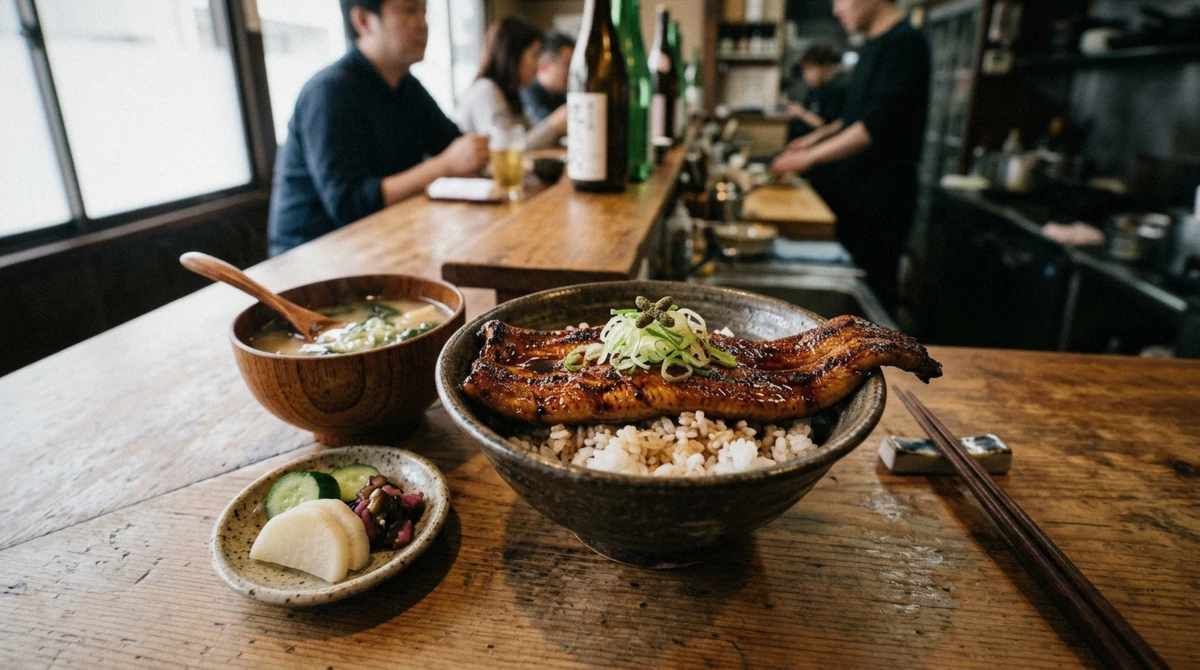
An anago bowl. Illustrative image.
The Best Month If You Only Have One Morning
Short on time? The oyster hut session runs 40 minutes and the market counters serve until mid-afternoon, so a single morning covers a lot. Ranked, with the trade-off named.
- January: coldest air of the year, so dress hard, but the hut is in full swing and the town is quietest.
- Early February: festival atmosphere at the Green Plaza, paid for with the thickest crowds of the season.
- Late November: hut is open and the last of the autumn leaves still hang at Entsuin and Zuiganji.
- Early March: the final days before the hut closes about early March, milder air but a closing window.
The Worst Time for Oysters, Honestly
April to October is simply not oyster season in Matsushima. The hut is shut, the festival is months away and the hotpot cruise is a winter extra. Nobody should visit in, say, August expecting oysters, and September carries the added problem that typhoon risk peaks then and wind cancels the boats, which can strand your plans on land.
The honest answer for an oyster trip outside November to March is to go to Sendai instead for gyutan, or come back in winter.
Who the off-season still works for: anyone coming for the cherry blossom at Saigyo Modoshi no Matsu park in mid to late April, the Toro Nagashi lantern festival on 17 August or the autumn night light-up at Entsuin from late October to mid November. Those months earn their trip on other grounds, just not on oysters. Our things to do in Matsushima guide covers the year-round sights.
So, When Should You Go for Matsushima Oysters?
Go between November and March, and aim for January or February if your dates are flexible, because that is the peak of the season and the quietest stretch of town outside the festival weekend. November is the runner-up, with the hut open and the last autumn leaves up at the temples. Early February is the month for the Oyster Festival at the Green Plaza, and the trade-off is crowds.
Avoid April to October for oysters, since the season has not started or has already closed.
Once you have your window, the tours compared here cover every style, from the walk-it-yourself short option to the full private day with the oyster lunch in the price. Check availability early for the festival weekend, since February weekends draw the biggest oyster crowds of the year.
Questions and Answers
When is oyster season in Matsushima?
Roughly November to March. The tourism association oyster hut opens about early November and closes about early March, and the winter oyster hotpot cruise runs in the same window. Outside these months the oyster options largely close down.
What is Matsushima famous for?
The bay itself, with about 260 small pine-topped islands, counted as one of the Three Views of Japan. Zuiganji Temple, rebuilt by Date Masamune in 1609, and Godaido Hall are the headline sights. In winter the oysters are a fame of their own.
Where can you eat oysters in Matsushima?
The tourism association oyster hut in season, the fish market by the shore, which opens roughly 8:00 to 17:00 with food counters until mid-afternoon, and the Oyster Festival in early February. The winter oyster hotpot cruise serves them on the water. Restaurants around the fish market also serve anago rice bowls.
How much is all-you-can-eat oysters in Matsushima?
The tourism association oyster hut charges 3,500 yen ($22.15) for adults and 1,750 yen ($11.08) for children for a 40-minute all-you-can-eat grilled oyster session. Prices at the fish market counters are not stated.
When is the Matsushima Oyster Festival?
In early February, at the Matsushima-Kaigan Green Plaza. It lands in the middle of the oyster season, so expect the biggest oyster crowds of the year. The exact dates each year are not stated.
Are Matsushima oysters eaten raw or grilled?
Grilled is the norm. The oyster hut serves them grilled, the festival is built around grilled oysters, and the hotpot cruise cooks them in broth. Nothing in the source material states raw oysters are served, so ask on the day if raw matters to you.